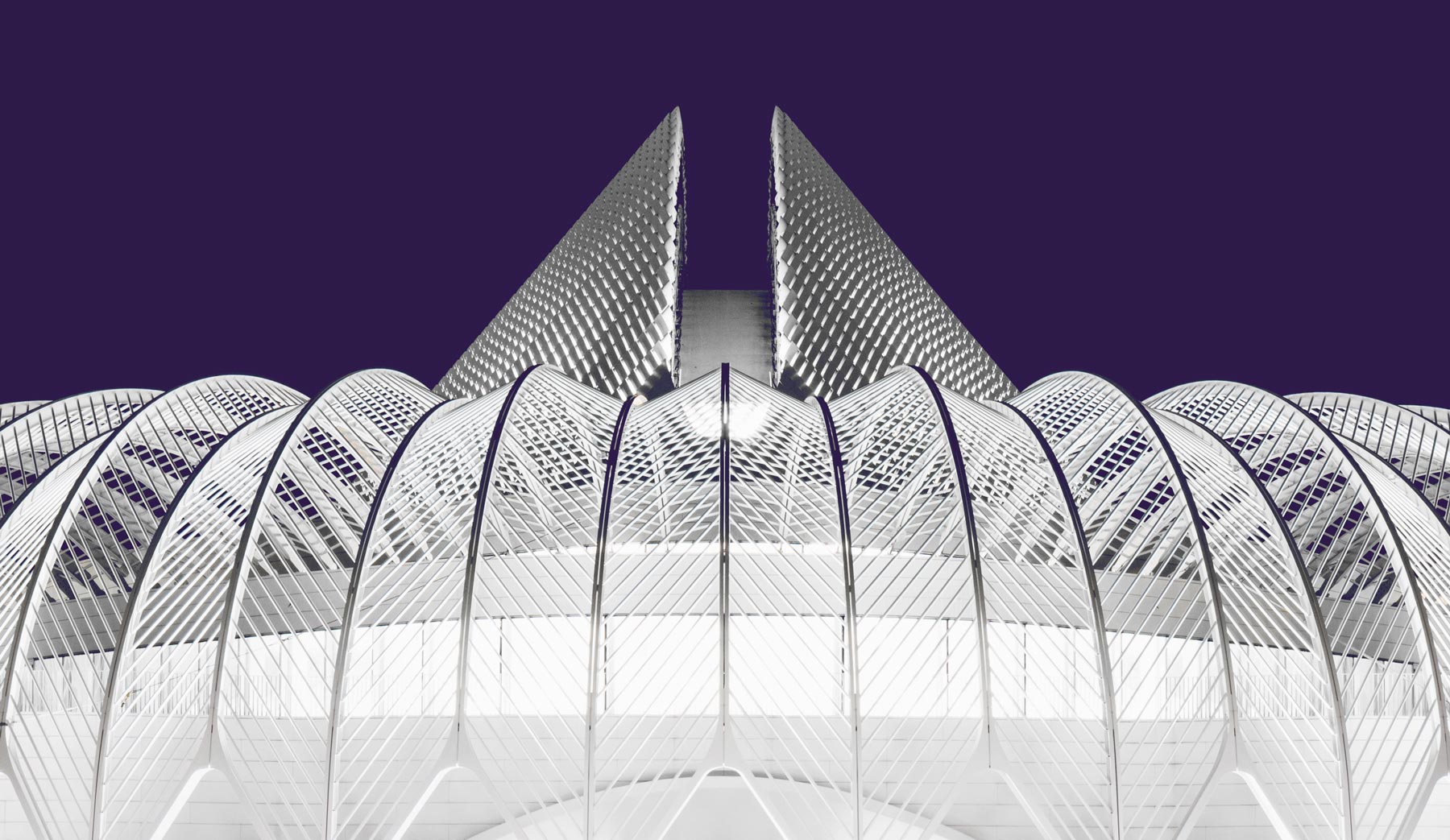
The year 2025 is ending just as audaciously for Florida Polytechnic University as it began. In a year that launched with a public safety-enhancing police invention and drew to a close with nearly $1 billion in economic impact, Florida Poly celebrated progress, expansion and international success. With outstanding rankings, record-breaking enrollment and unparalleled achievements, the University’s pursuit of excellence never slowed.
1. Florida Poly fuels $952 million in annual economic impact
The University’s outstanding achievements in academic excellence, industry partnerships, student outcomes and community collaboration deliver nearly $1 billion in economic activity each year, according to a study by renowned economist Dr. Rick Harper. The University contributes over $523 million annually to Florida’s gross domestic product, including over $117 million within Polk County.
2. Florida Poly earns top national rankings
The University’s remarkable performance continued to attract widespread national attention in 2025. It was named the No. 1 public college in the South for the fifth straight year and No. 3 best value college in the South by U.S. News and World Report. Florida Poly also received several more high rankings throughout the year, including national rankings for Top 10 best career outcomes and Top 20 best return on investment.
3. Enrollment hits record high in Fall 2025, momentum soars
More than 1,900 students poured onto campus to launch the 2025-2026 academic year in August, a meteoric increase of over 10% from the previous fall – which was also a record-setter. It was Florida Poly’s second year in a row achieving record-breaking enrollment, and it’s well on its way to reach its goal of 3,000 students by 2030.
4. University opens new hub for innovation: the Gary C. Wendt Engineering Center
In November, the University unveiled the state-of-the-art Gary C. Wendt Engineering Center (GCW), a facility for hands-on engineering exploration. The $15 million, 40,000-square-foot building adds advanced research and development labs for multiple engineering disciplines, an autonomous technology bay, faculty offices, a large conference room and collaborative workspaces – all designed to grow and evolve as the University does.
5. Five professors rank among world’s top 2% of scientists
Faculty continued gaining international recognition for their dedication to advancing research in their field, as five researchers were recognized on Stanford University’s prestigious annual World’s Top 2% Scientists list. The five faculty members are experts in nanotechnology and sensors, power electronics, transportation, rare earth element recovery, computational intelligence and software engineering.
6. University president expands global reach on Florida trade mission to Asia
A two-week trade mission to Taiwan and Japan brought President Devin Stephenson face-to-face with international industry and academic leaders, paving the way for partnerships and future growth. Stephenson was accompanied by Florida’s Secretary of Commerce J. Alex Kelly and Secretary of State Cord Byrd, as well as several other distinguished leaders from throughout the state.
7. Florida Poly – OCOM to launch accelerated pathway to medical degree
The state’s doctor shortage got a shot in the arm in July when Florida Poly and the Orlando College of Osteopathic Medicine (OCOM) announced their new 6-Year BS/DO pathway, which allows students to earn both Bachelor of Science and Doctor of Osteopathic Medicine (DO) degrees in just six years.
8. Phoenix Racing powers to podium finish in national solar car race
Spark MK2, Florida Poly’s student-built solar racecar, took third place at the national Electrek Formula Sun Grand Prix. The elite, three-day endurance race saw Florida Poly’s Phoenix Racing complete 175 laps, outperforming programs such as Virginia Tech, the University of California, Berkeley and the University of Florida – and topping its own seventh-place 2024 debut.
9. As Fulbright program grows, U.S. State Department takes notice
International academic partnerships grew in 2025, with much of that focus on the University’s growing Fulbright program, which promotes the exchange of education, research and ideas across borders. In February, the U.S. State Department, which oversees the program, recognized Florida Poly as a Fulbright Top-Producing Institution. As the Fall 2025 semester began, a record number of Fulbright participants were committed to pursuing their goals at Florida Poly.
10. NSF-funded study uses brain data to rethink engineering education
A new $200,000 National Science Foundation grant is helping researchers better understand what happens in engineering students’ brains as they tackle complex design challenges. Led by mechanical engineering assistant professor Dr. Elisabeth Kames, the project uses tools like electroencephalography (EEG) alongside student self-assessments to connect specific brain activity patterns with engagement and problem-solving behavior and ultimately reshape how engineering design is taught.
11. Lakeland Police Department adopts high-tech Florida Poly body-cam trigger
A custom body camera trigger developed and produced at Florida Poly is now helping Lakeland police officers capture critical moments the instant a firearm is drawn. The innovative bracket, designed by mechanical engineering alumnus Matthew DeCicco ’24 and fabrication specialist Mike Kalman, mounts seamlessly to officers’ holsters and activates their body cameras and in-car systems via a magnetic and Bluetooth-enabled sensor, enhancing transparency and safety in the field.
12. Florida Poly and Sittadel launch student-driven cybersecurity center
A new partnership with Lakeland-based cybersecurity firm Sittadel is positioning Phoenixes on the front lines of digital defense. The student-powered Security Operations Center on campus will provide around-the-clock monitoring and response capabilities for real-world cyber threats. It also creates robust pathways for internships, capstone projects and mentorships that feed directly into Florida’s growing cybersecurity workforce.
13. Student research uncovers laser light from peacock feathers
Florida Poly senior Anthony Fiorito earned significant national attention with research showing that peacock feathers can emit laser light under the right conditions. Working under the guidance of Dr. Nathan Dawson, associate professor of engineering and physics, Fiorito showed that when the feathers’ intricate microstructures are combined with a special fluorescent dye, they can generate miniature, precisely colored laser beams, opening new possibilities in photonics and organic laser materials.
14. Alumnus shifts gears into autonomous vehicle development at NVIDIA
Just a few years after graduating, computer engineering alumnus Joseph Patullo ’21 is working to help shape the future of self-driving cars as a systems software engineer in NVIDIA’s autonomous vehicles division in Silicon Valley. Drawing from the multidisciplinary, hands-on experience he gained at Florida Poly, Patullo now supports software integration and testing for advanced driver assistance systems used by global automotive manufacturers.
15. Promising spacewalk solution engineered by Florida Poly students
A team of mechanical engineering students designed an innovative tool to help astronauts more easily secure overlapping layers of insulating material on the International Space Station during spacewalks. Tested at NASA’s Johnson Space Center as part of the Micro-g NExT Challenge, the Florida Poly device was the only one to successfully complete the task and was praised by NASA evaluators as closely matching what they would design for real spacewalk use.
Contact:
Lydia Guzmán
Director of Communications
863-874-8557